


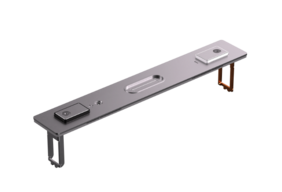
Battery cell production is being expanded across Europe, increasing the demands placed on cell components in terms of safety, integration, and scalability. Swoboda is introducing a new solution for e‑mobility and energy storage: the modular Battery Lid Assembly for prismatic cells. The component is used in battery cells, packs, and systems for electric vehicles as well as in other battery‑powered applications, and is tailored to customer specifications.
Flexible configuration, short cycle times
Swoboda’s lids are developed for prismatic cell types and can be customized across a wide range of parameters – from electrode design and valve shape to mechanical dimensions. This enables seamless integration into both existing and new cell architectures, regardless of the manufacturing location.
“With our solutions, we aim to specifically strengthen European battery cell production while at the same time acting as a reliable development partner on an international level,” emphasizes Christian Göser, CSO at Swoboda.
Using state‑of‑the‑art FEM simulations and modern manufacturing technologies – including laser welding and forming processes – Swoboda meets the highest quality standards while maintaining short cycle times. The Battery Lid Assemblies are available in various form factors and can be individually tailored to customer requirements.
Further information on SWOBODA Lid Assemblies
Safe, reliable and robust
The Battery Lid Assembly provides a pressure‑tight seal for the cell and includes both the anode and cathode sides. An integrated burst pressure valve can optionally be incorporated to enhance system safety.
Swoboda’s Battery Lid Assemblies are individually engineered and dimensioned to precisely meet customer requirements. They are manufactured from high‑quality materials such as copper and aluminum, ensuring reliable electrical performance and high robustness. The components are designed for operating temperatures of up to +80 °C and can therefore withstand demanding thermal conditions. The burst pressure can be flexibly configured within a range of 8 to 14 bar to meet varying safety requirements. In addition, all variants are qualified for automotive applications and are therefore suitable for high‑volume production in international battery cell manufacturing.